what does it mean when my co oxygen levels are good but its hard to breathe
Shortness of breath—what doctors call dyspnea—is the unpleasant sensation of having difficulty breathing. People experience and describe shortness of jiff differently depending on the cause.
The rate and depth of breathing ordinarily increase during exercise and at high altitudes, but the increment seldom causes discomfort. Breathing rate is also increased at rest in people with many disorders, whether of the lungs or other parts of the body. For case, people with a fever generally breathe faster.
With dyspnea, faster breathing is accompanied by the sensation of running out of air. People feel as if they cannot breathe fast enough or deeply plenty. They may discover that more than endeavor is needed to expand the chest when animate in or to miscarry air when breathing out. They may likewise accept the uncomfortable sensation that inhaling (inspiration) is urgently needed earlier exhaling (expiration) is completed and have diverse sensations often described as tightness in the chest.
The almost common causes overall include
-
Concrete deconditioning (for instance, weakening of muscles and the heart due to inactivity)
-
Weight gain
-
Pregnancy
The most common crusade in people with a chronic lung or center disorder is
-
Worsening of their illness
However, such people may also develop another disorder. For example, people with long-standing asthma may have a heart attack, or people with chronic heart failure may develop pneumonia.
People who have lung disorders often feel dyspnea when they physically exert themselves. During exercise, the trunk makes more carbon dioxide and uses more oxygen. The respiratory eye in the encephalon speeds upwards animate when blood levels of oxygen are depression or blood levels of carbon dioxide are high. If the heart or lungs are not operation normally, even a little exertion can dramatically increase the animate charge per unit and dyspnea. Dyspnea is so unpleasant that people avoid exertion. Every bit the lung disorder becomes more severe, dyspnea may occur even at rest.
Dyspnea may result from
-
Restrictive lung disorders
-
Obstructive lung disorders
In obstructive disorders (such as COPD Chronic Obstructive Pulmonary Disease (COPD) Chronic obstructive pulmonary disease is persistent narrowing (blocking, or obstacle) of the airways occurring with emphysema, chronic obstructive bronchitis, or both disorders. Cigarette... read more 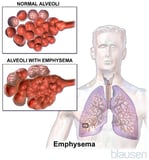 or asthma Asthma Asthma is a condition in which the airways narrow—usually reversibly—in response to sure stimuli. Coughing, wheezing, and shortness of breath that occur in response to specific triggers are... read more than
 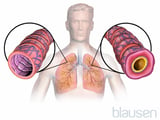 ), resistance to airflow is increased because the airways are narrowed. Because airways widen during inhalation, air tin can usually be pulled in. Nevertheless, because airways narrow during exhalation, air cannot be exhaled from the lungs as fast as normal, and people wheeze and breathing is labored. Dyspnea results when also much air is left in the lungs later exhaling.
People with asthma have dyspnea when they take an attack. Doctors typically advise people to proceed an inhaler on manus to use during an assail. The drug in the inhaler helps open up the airways.
Some people with heart failure have orthopnea, paroxysmal nocturnal dyspnea, or both. Orthopnea is shortness of breath that occurs when people prevarication down and is relieved past sitting up. Paroxysmal nocturnal dyspnea is a sudden, ofttimes terrifying assault of dyspnea during slumber. People awaken gasping and must sit or stand up to catch their breath. This disorder is an extreme form of orthopnea and a sign of severe heart failure.
In hyperventilation syndrome, people experience that they cannot get enough air, and they exhale heavily and rapidly. This syndrome is commonly caused past anxiety rather than a physical trouble. Many people who experience it are frightened, may have chest pain, and may believe they are having a heart attack. They may have a change in consciousness, commonly described as feeling that events occurring effectually them are far abroad, and they may feel tingling in their hands and feet and around their mouth.
The post-obit data tin can help people decide whether a doctor's evaluation is needed and help them know what to wait during the evaluation.
In people with dyspnea, the following symptoms are of particular concern:
-
Shortness of breath at rest
-
A decreased level of consciousness, agitation, or confusion
-
Chest discomfort or the feeling the heart is pounding or racing or has skipped a beat (palpitations)
-
Weight loss
-
Night sweats
People who take shortness of breath at rest, chest pain, palpitations, a decreased level of consciousness, agitation, or confusion or have difficulty moving air in or out of their lungs should go to the hospital right abroad. Such people may need immediate testing, handling, and sometimes admission to the hospital. Other people should telephone call a doctor. The medico can decide how speedily they need to be evaluated based on the nature and severity of their symptoms, their historic period, and whatever underlying medical conditions. Typically, they should be evaluated within a few days.
Doctors ask questions to determine
-
When shortness of breath started
-
Whether it started abruptly or gradually
-
How long the person has felt short of breath
-
Whether whatsoever weather (such every bit cold, exertion, exposure to allergens, or lying downwards) trigger it or make it worse
The person is also asked questions about past medical history (including any lung or heart disorders), a history of smoking, any family members who have had loftier blood pressure level or high cholesterol levels, and hazard factors for pulmonary embolism (such as recent hospitalization, surgery, or long-altitude travel).
The physical examination focuses on the eye and lungs. Doctors mind to the lungs for congestion, wheezing, and aberrant sounds called crackles. They heed to the heart for murmurs (suggesting a center valve disorder). Swelling of both legs suggests heart failure, but swelling of only ane leg is more likely to result from a claret clot in the leg. A claret clot in the leg may break off and travel to the claret vessels in the lungs, causing pulmonary embolism.

Handling of dyspnea is directed at the crusade. People with a depression claret oxygen level are given supplemental oxygen using plastic nasal prongs or a plastic mask worn over the confront. In astringent cases, particularly if people cannot exhale deeply or rapidly enough, animate may be assisted by mechanical ventilation using a breathing tube inserted in the windpipe or a tight-plumbing fixtures face mask.
Morphine may be given intravenously to reduce anxiety and the discomfort of dyspnea in people with various disorders, including a heart assail, pulmonary embolism, and a terminal illness.
-
Shortness of jiff (dyspnea) is usually caused by lung or heart disorders.
-
In people with a chronic lung disorder (such as chronic obstructive pulmonary affliction) or heart disorder (such equally heart failure), the near common cause of dyspnea is a burst of the chronic disorder, only these people can besides develop a new problem (such as a center attack) that contributes to or causes dyspnea.
-
People who take dyspnea at rest, a decreased level of consciousness, or confusion should go to the hospital immediately for emergency evaluation.
-
To determine the severity of the problem, doctors measure oxygen levels in the claret with a sensor placed on a finger (pulse oximetry).
-
Doctors evaluate people for inadequate delivery of claret and oxygen to the heart (myocardial ischemia) and for pulmonary embolism, only sometimes symptoms of these disorders are vague.
Source: https://www.msdmanuals.com/home/lung-and-airway-disorders/symptoms-of-lung-disorders/shortness-of-breath

Post a Comment for "what does it mean when my co oxygen levels are good but its hard to breathe"